
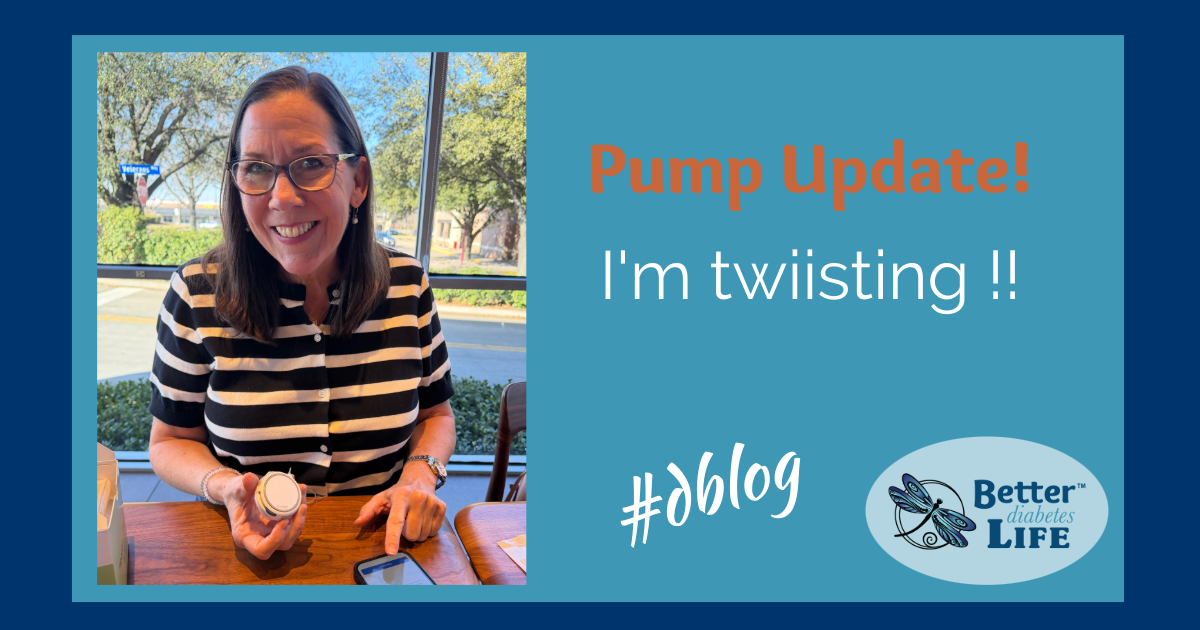
I’ve been pumping insulin since 1999.
That background matters. I was on a Medtronic pump for years — even after I left traditional employment to start a private coaching business. At that point, I opted for lower-premium coverage and paid for insulin and pump supplies out of pocket. The difference was about $750 a month, plus a several-thousand-dollar deductible before much coverage kicked in. So the math mathed. It was cheaper to just pay cash.
I eked every ounce of life out of my out-of-warranty Medtronic Paradigm pump until it failed. When that happened, I switched to my backup — maybe the 523 series? Who knows. But it kept me pumping.
CGMs, or Why I Didn’t Want One
During the time I was paying cash, I avoided CGMs. My earlier attempts with the Medtronic-compatible device actually made my blood sugars worse. I found myself over-correcting and under-correcting, with alarms constantly disrupting my sleep, meetings, and peace of mind. Finger sticks worked fine for me, thank you very much!
When I was paying out of pocket, I was also able to find very inexpensive test strips online, and they had worked quite nicely since my diagnosis.
Divorce, Insurance, and Becoming a Podder
In the midst of being self-insured, I got divorced. The only option available to me as a single person with Type 1 Diabetes was an ACA plan, and Omnipod was the preferred pharmacy benefit pump, which was much easier on the monthly budget. So in 2022, after 23 years of using a tubed pump, I became a podder.
And honestly? Some things felt magical.
It was freaky to get in the water with my pump and not worry about frying the electronics. Or to take my clothes off and not have to decide where to put the pump — under my armpit or on the counter — until I was dressed and could stick it back in its home… my bra. My nervous system was so used to caring for this extension of my “self”.
With Omnipod, I had the option of a closed-loop system with the Dexcom continuous glucose monitor. The pod and the CGM talked to each other….and adapted to my blood sugar. Pretty nice! It was liberating to allow a device to take off some of the mental load.
My A1c didn’t change appreciably. It stayed under my goal of 7.0, aside from some stressful periods during my divorce. But I could honestly check the box that said, I feel good about my glucose control. Less stress. More automation.
When the Algorithm Stops Working
As we all know, diabetes doesn’t play by the rules….ever.
Last year, I started struggling with the algorithm not correcting sufficiently. I would sit at 180 all night with no automated adjustments. My amazing endocrinologist — Dr. Welch is the best — and I reviewed everything. We questioned it. We tried adjusting. Nothing helped.
In his words, “You may have exceeded the usefulness of this algorithm.”
To be clear, my A1c was still under 7. But I knew it could be better—and the system just wasn’t getting me there.
That’s when he mentioned a new pump coming out that used the Tidepool algorithm.
Tidepool and the Roots of Loop
Tidepool is a grassroots nonprofit that stepped in when industry innovation lagged behind the real needs of people with diabetes.
Its roots reach back to the early 2010s from the #WeAreNotWaiting movement, where people in the diabetes community created DIY systems to link diabetes tech, create delivery algorithms and visualize diabetes data. These included the Riley Link and Loop algorithm, which connected the tech and began automated insulin delivery.
Fast-forward: the Tidepool algorithm is now FDA-approved and integrated into twiist™ Automated Insulin Delivery (AID) System powered by Tidepool.
What Stood Out About twiist
Some of the more novel features caught my attention:
- It allows for lower target ranges
Omnipod was 110 (though I found it never really kept me there).
twiist targets 87. - It allows for a pre-meal range, starting to bring glucose down before you tell it how many carbs you’re going to eat.
- You can adjust carb entries after the fact if you don’t eat what you planned, and it handles the insulin delivery.
It also pairs with the Libre 3 Plus CGM, which:
- Allows for 15 day wear (vs. 10 days with Dexcom)
- Is much smaller — about dime-sized
- Has no separate transmitter
- Uses a much smaller inserter. I appreciate that there’s less plastic waste with each change.
Getting the Pump
Dr. Welch set the ball in motion last year. twiist did a soft launch at the end of 2025, which, in my humble opinion was wise — get the kinks out of implementation, delivery, and training before going widespread.
I talked with local reps at the Breakthrough T1D Walk in November and got to play around with the pump. It felt good on all counts.
By January 2026, they were ready — and so was I.
Initially, my insurance declined it. But we know the drill. Prior authorization paperwork, wasted time, proof I am T1D and voilà — it was covered.
Once approved and sent to the pharmacy, the pump was delivered to my door later that same day. BTW – all of this insurance nonsense happened while I was in Vegas, speaking at a conference, and working with the twiist team via text!
My trainer, Joyce, was amazing. We met locally 4 days later, she showed me the ropes, laughed at my jokes, listened to my stories, and made the process a breeze.
And just like that, last Tuesday — January 20th — I became a twiister. Not sure that’s a real term, but I’m going with it.
-

- Ready to learn!
-
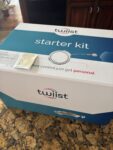
- Starter Kit
-
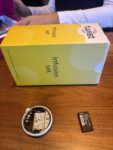
- Infusion Sets (pump and battery)
-
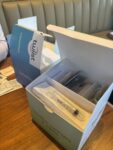
- Cassette and syringes
-
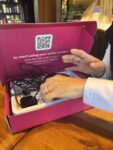
- Chargers and batteries
-
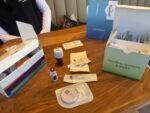
- All the supplies to get set up
-
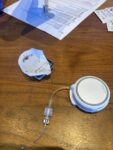
- Old pump, new pump
-

- The lovey Joyce
.
One Week In: Truth Bombs
Here’s what’s been true so far:
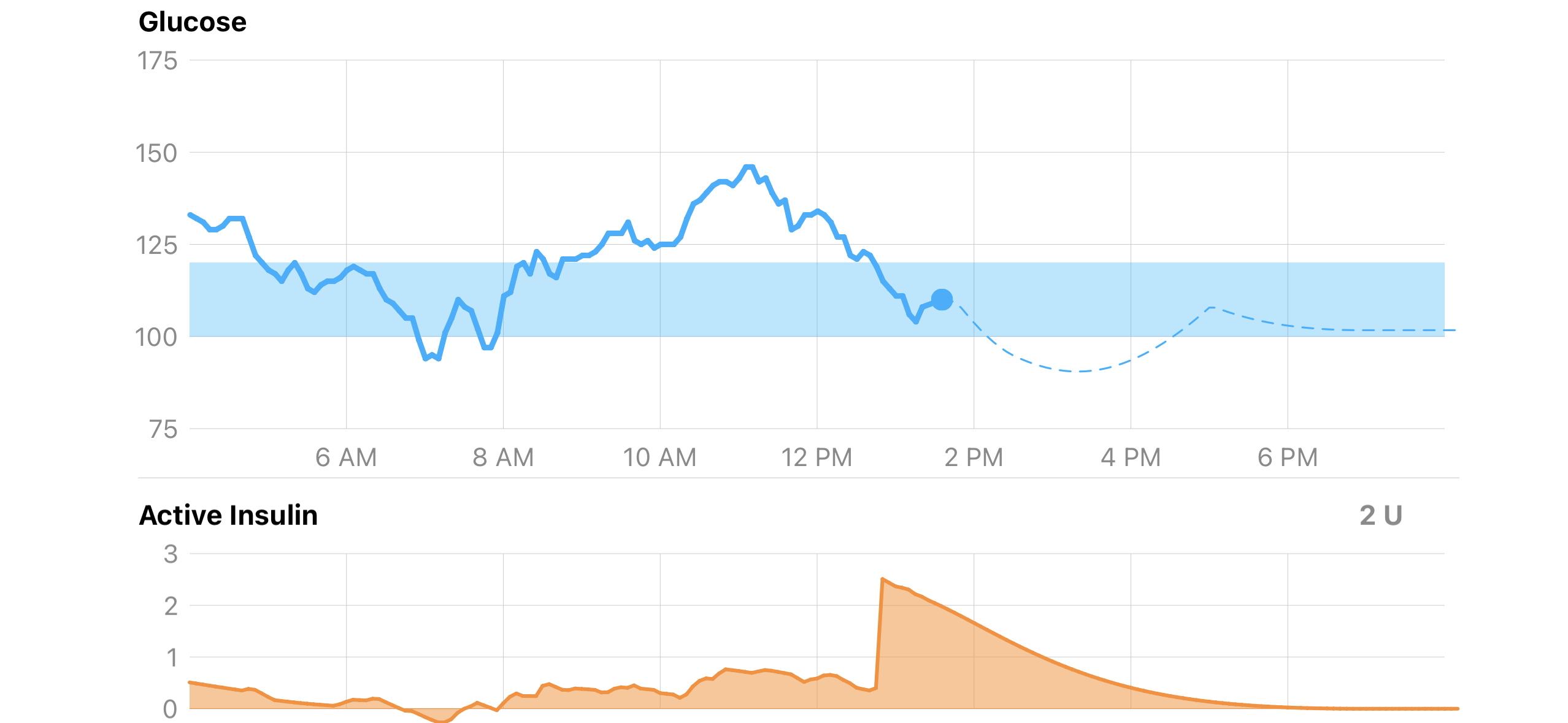
- My blood sugars have been in range like never before — some days 100%
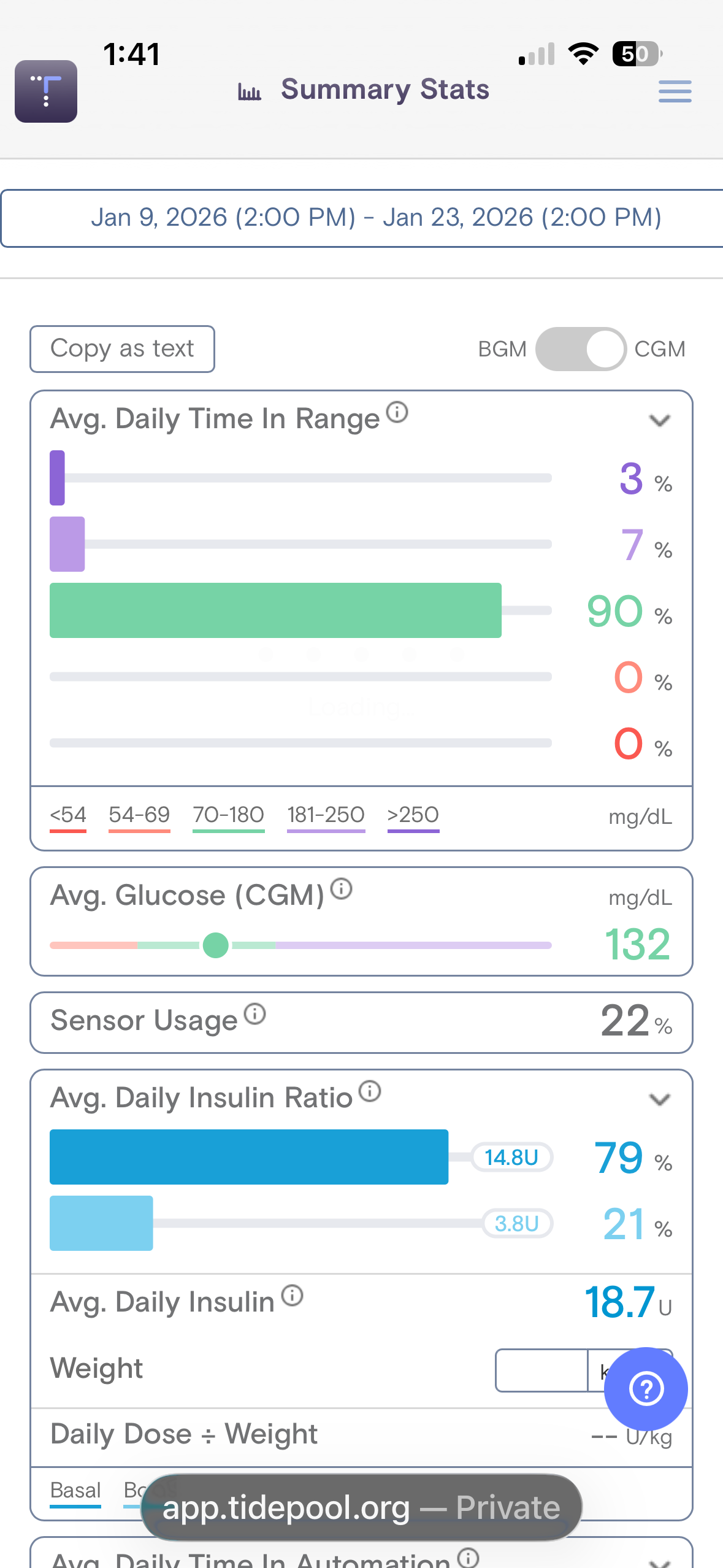
- Overall time in range is 88% after one week (previously low 70s)
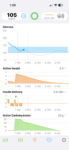
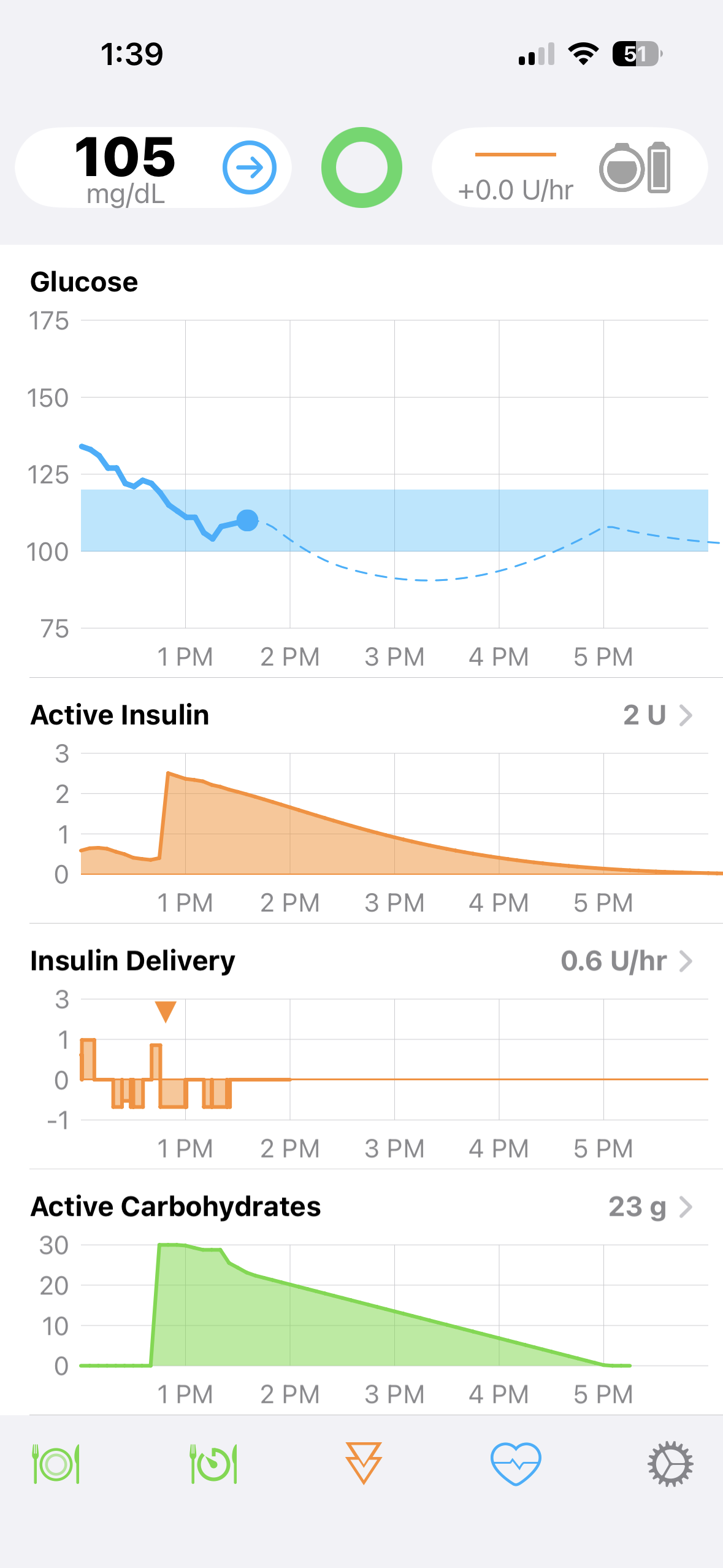
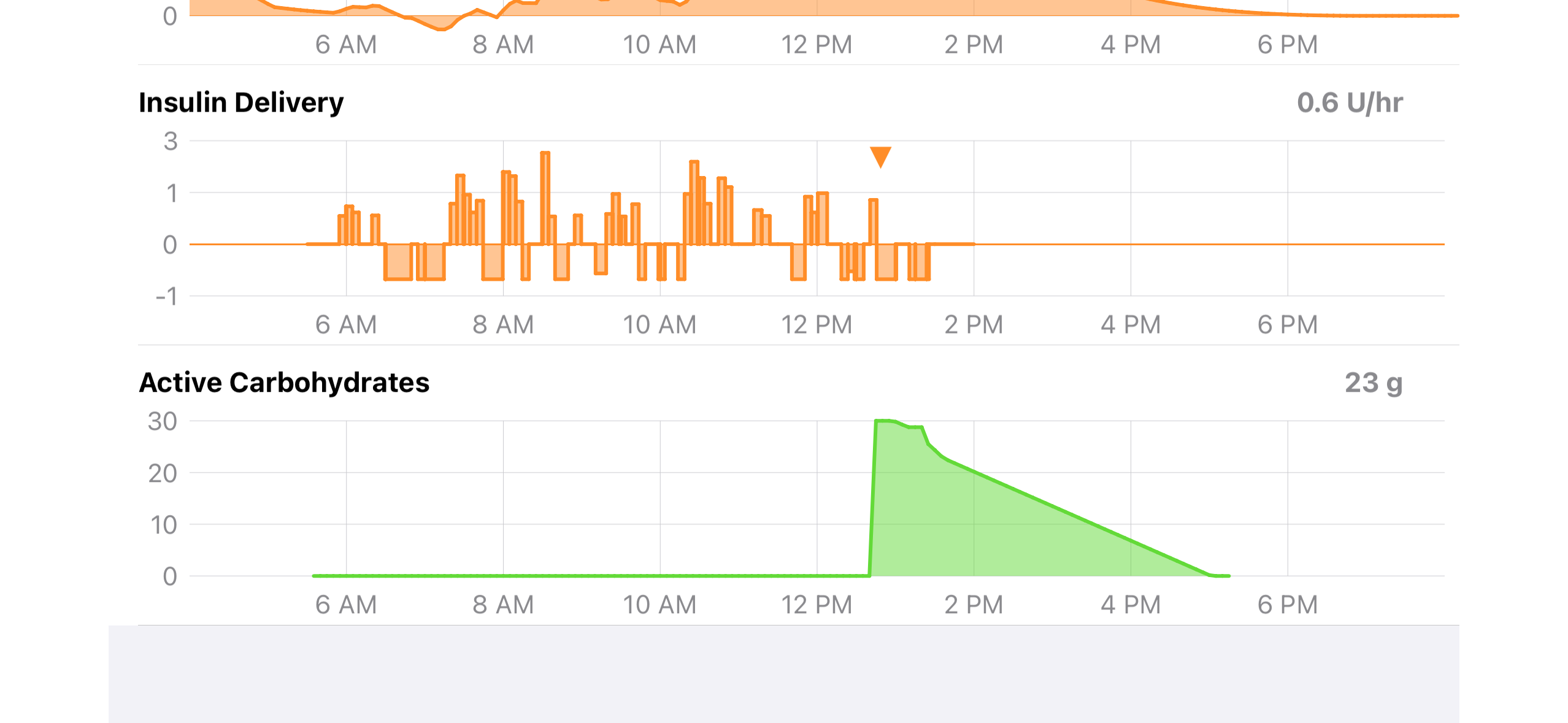
- The app is very intuitive and shows glucose, active insulin, insulin delivery, and carbs on one screen — it really tells the story
- I’ve had zero correction boluses
- I’ve had two lows, both in the 60s and I saw them coming on the screen. Nice! It does a great job at visually forecasting your BG.
- I’m “carb-scared”. Nothing related to the pump; carbs tend to spike me more than they used to. I don’t love pre-bolusing (don’t hate on me). I’ve had enough experiences with insulin on board + delayed food. Seeing how carbs play out here feels reassuring.
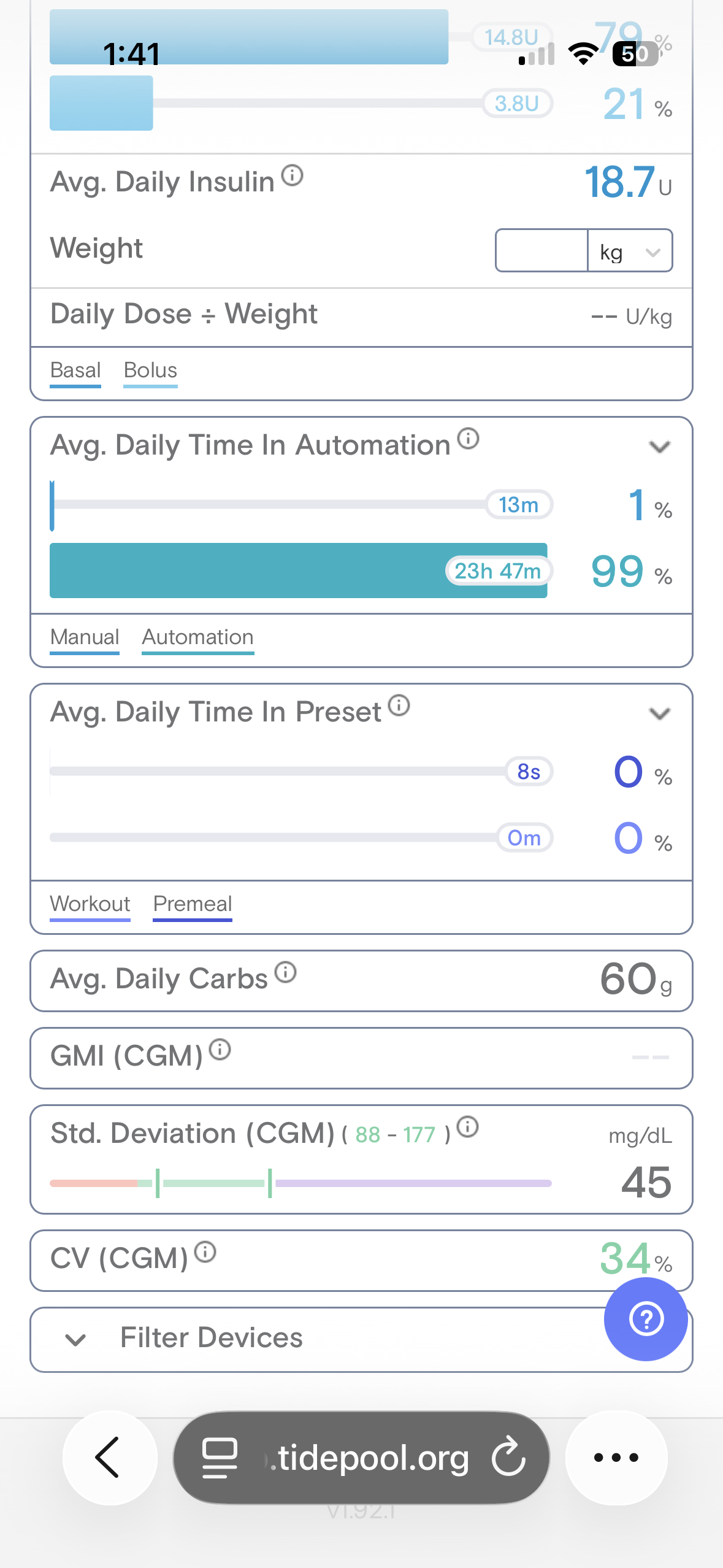
- My average carb intake is about 60–70g/day, but the carb summary confuses me a bit. I “think” it infers carbs from insulin needs. But I swear I have been counting as closely as possible.
- Disconnecting/reconnecting is easy, with adjustable tubing angle – very convenient.
- Battery life is solid—one battery lasts longer than a cassette
- Insertion is easy and painless. Just open and pop it on. The size of the insertion device is VERY small. So far, I have used abdomen, front of leg and upper arm without issue.
- I am using skin prep because my spidey sense is telling me I should. The site is so small, which is a good thing, but the small site makes me curious if enough adhesive surface. Again, so far not an issue.
- The pump is incredibly light, under 2 ounces. Same as a travel soap bar, two AAA batteries, or a slice of bread.
- It does use more insulin due to tubing priming. Common for tubed pumps, but after pod life, I notice it. Old cash-pay habits die hard—I don’t like wasting a drop.
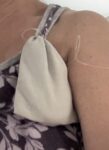 PJ problems. Still getting used to having a tubed pump again. I had tossed all my PJs with pockets, so I am improvising. Last night, I found an old jewelry bag and tied it to my top. Years ago, I used to pin a baby sock to my PJ top. Shopping or sewing may be in my future…..
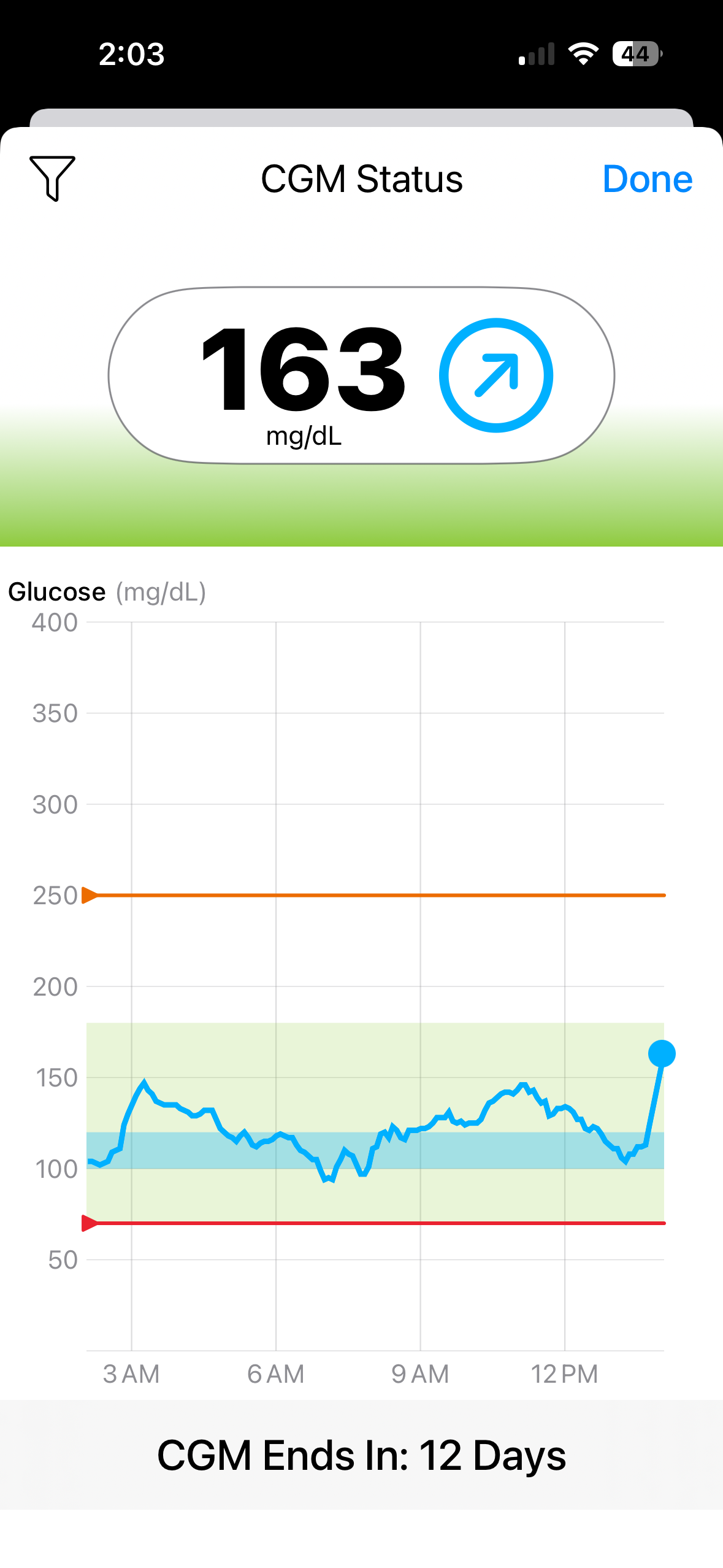
The twiist app is great for real-time management, but it’s harder to look back at previous days. For that, I need Tidepool or Apple Health. The Tidepool website has good detail, but the phone app is limited. Here are few quick examples…..there is a LOT more!
-
- Main twiist screen
-
- Rotate phone more glucose and active insulin
-
- Rotate phone more Insulin delivery and carbs
-
- Tidepool app
-
- Tidepool app
-
- Libre CGM reading
Site Change in Action
I recorded my second complete cassette and site change so you can “see” what it’s like. Be forewarned, I do an insertion and you see a bit of the needle, but it is barely visible.
Also – just for the record, I am not being sponsored or paid. Just sharing my experience for curious diabuddies who want to learn.
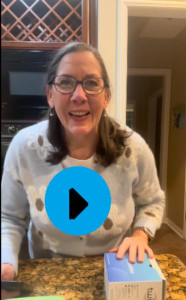
Peace in Transition
I’ll close with the less technical side. The part that really makes this “new thing” less disruptive. It is my choice.
I chose to look at the benefits. I chose an attitude of curiosity. I chose to allow myself time to adapt. I chose not to let this disrupt my life.
Is it new? Yes.
Can I still do everything I did before? Yes.
But I am in the driver’s seat and empowered to take these steps.
Learning how to reset my nervous system has been my greatest asset. I can calm my internal landscape almost at will now.
A pause.
A hand over my heart to connect with my Vagus nerve.
A full breath in flowing through head, heart, belly, all the way to my tail and beyond.
An extended breath out where I soften everything (shoulders, tongue, forehead, jaw, neck)
And the words: “I am OK” spreading to every cell in my body.
I’ve practiced this so often that it’s nearly Pavlovian. Just the thought I am OK changes my physical state, softening fight-or-flight and restoring safety.
Our busy world trains us to be worried and concerned. An intentional internal shift creates peace and possibility.
Even when you get a new techy pancreas.
Be Well,

I am a T1D for over 40 years. I started my very first pump in 1999. I worked at a Trauma Center and our EPO did not have coverage for insulin pumps. I put together a Minimed Rep and our HR Rep and 3 of us all got out Minimed 508C pumps in 1999. I’ve continuously used pumps since then. All of my pumps had tubing and I was fine with that. I became aware of the twiist AID Pump in 2025. I contacted a Rep and my coverage was confirmed and I started it in October of ‘25. I presented it to my Phoenix Insulin Pumpers Group. One member is now checking if his benefits will cover it. I tell everyone this pump has changed my life. I met the dad in Phoenix several years ago who created homemade pumps for his 2 Diabetic sons which used Looping. Tidepool now continues the production of that app. My life is so much easier now. I’ve been told by many people that I should become a Spokesperson for this pump. I LOVE IT!
Hi Sharon
I am sooo sorry for the delay in my response. The posts show up in my admin tool and I haven’t logged in recently. My first pump too was 1999 and I was at a Trauma Center then! I am loving twiist too! I have a friend who was one of the first pumpers ever – in the 70s maybe and it was a gigantic box!. We have come a long way baby!